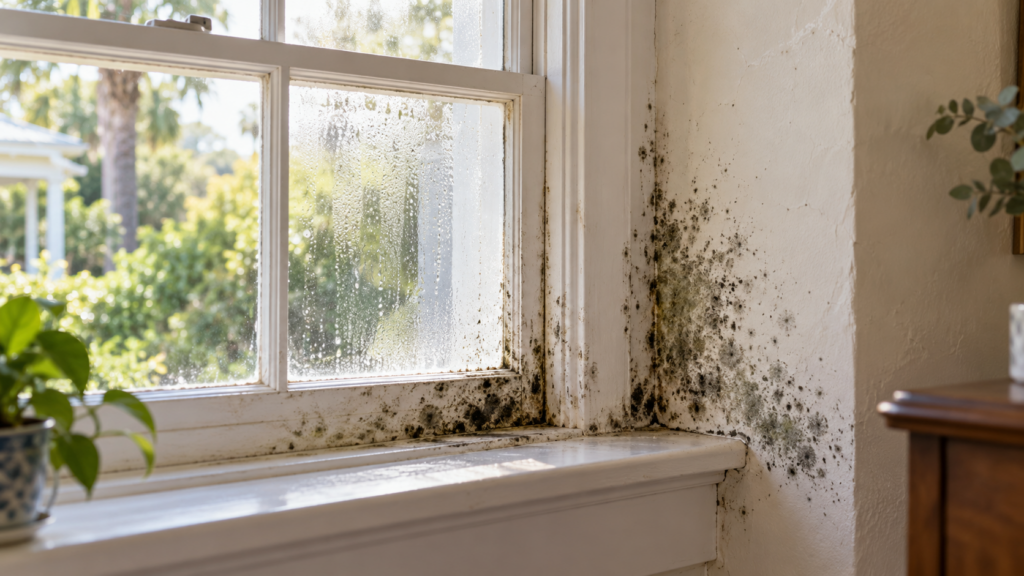
You notice dark spots in a closet or a musty smell in a bedroom. You check the ceiling, look under the sink, and find no obvious leak. So where is the moisture coming from?
Mold can grow without a plumbing leak, roof leak, or flood. Elevated humidity and condensation can provide enough moisture for growth. For Charleston homeowners investigating a mold concern, the search should include these less obvious sources.
Where Does the Moisture Come From?
Water does not have to arrive as a puddle to create a problem. Moisture can accumulate through everyday activities and conditions around the home.
Cooking and showering: Both release moisture into the air. Without effective ventilation, that moisture can remain indoors.
Condensation: When humid air meets a sufficiently cold surface, water can collect. Cold pipes, windows, and inadequately insulated air-conditioning ducts are possible locations.
Damp crawl spaces: Moisture evaporating from exposed soil can increase crawl-space humidity and move into other parts of the building.
Cold corners behind furniture: These overlooked surfaces can develop condensation even when the room looks dry elsewhere.
The useful question is: “What is keeping this particular area damp?”
Why a Cool House Can Still Feel Damp
A comfortable thermostat setting does not tell you whether indoor humidity is under control.
The U.S. Department of Energy explains that air conditioning can lower indoor temperature without adequately addressing the moisture load. Turning the thermostat down further may leave a house feeling cold and clammy.
If your home stays cool but feels persistently damp, consider having an HVAC professional evaluate its humidity performance. Depending on the findings, the solution may involve system adjustments or supplemental dehumidification. A lower temperature setting alone may not resolve the problem.
Start by Measuring Indoor Humidity
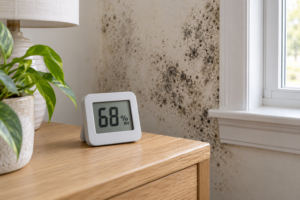
A small digital humidity monitor gives you information that a temperature reading cannot.
The EPA recommends keeping indoor relative humidity between 30% and 50%. Use a humidity gauge to see how your home compares with that guidance.
For a useful starting record, note the room, time, reading, and whether someone recently showered or cooked. Compare the area of concern with another room.
These observations can help you explain the pattern when arranging an inspection. Treat them as background information, rather than a diagnosis of what is happening inside a wall.
Practical Ways to Reduce Everyday Moisture
Start with the sources you can identify:
- Use bathroom and kitchen exhaust fans that discharge outdoors.
- Keep surfaces dry and address spills promptly.
- Maintain your HVAC filters according to the manufacturer’s instructions.
- Consider outdoor conditions before opening windows to reduce humidity; humid outdoor air may not help.
- Investigate persistent dampness instead of assuming it is normal for the season.
The EPA’s guide to indoor air quality provides additional guidance on ventilation, humidity, and household maintenance.
Why Mold Can Return After Cleaning
Cleaning addresses the growth that is already present. Lasting improvement also requires correcting the moisture condition.
If the surface remains damp, mold is likely to return. Painting or caulking over mold is not a substitute for cleanup, and some moldy porous materials may need replacement.
A dehumidifier can help manage moisture, but it does not remove existing mold from affected materials. The cleanup and moisture correction need to work together.
When Should You Arrange an Inspection?
Consider professional help when growth keeps returning, the affected area is extensive, or a persistent moldy smell has no visible source.
Avoid opening walls or pulling away wallpaper simply to investigate suspected hidden growth. Disturbing contaminated materials can release spores, and hidden mold investigations may require an experienced professional.
If you have noticed recurring spots, unexplained dampness, or a musty area in your Charleston property, learn about our mold inspection services or contact Charleston Mold Remediation to discuss your concerns.