
When you hire someone to investigate a mold concern, you want clear answers. What did they find? Where were the samples collected? Which photographs show the areas being discussed? And what work are they recommending?
At Charleston Mold Remediation, documenting those details is an important part of the job. We use Restoration Workflow to keep customer information, inspection notes, photographs, laboratory results, and proposals connected to the same project.
We also have a direct connection to the software: our team developed Restoration Workflow around the day-to-day needs of running a mold remediation business. Here’s how that approach helps us keep your project organized.
Keeping the details with the right property
A mold project can involve several conversations, different rooms, multiple samples, and more than one visit. Having the information together makes it easier to refer back to what was documented.
Our job records help us organize:
- Customer and property information.
- Inspection observations and photographs.
- Sample locations and laboratory documents.
- Reports and proposed work.
- Documents we may need during follow-up conversations.
This gives our team a consistent place to work from as the project progresses.
Photographs that support the inspection notes
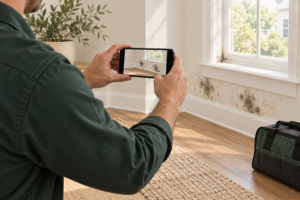
A photograph is more useful when you know what it shows and where it was taken.
We use room and area information to help organize inspection photographs. That makes it easier to connect a written observation with the part of the property being discussed.
For a homeowner, those details can be especially helpful when an area is difficult to access or when you’re reviewing the findings after the visit. For a property manager, they can also help explain the situation to an owner who wasn’t present.
Keeping laboratory results connected to the inspection
When samples are collected, the sampling details and laboratory results become part of the project record.
We keep the original laboratory documents alongside the related inspection information. This helps us return to the source report when discussing a particular sample or answering a follow-up question.
The same principle applies when preparing a customer-facing report: photographs, notes, and laboratory information should be easy to connect. Our team reviews the report before sending it so we can explain the findings and recommendations clearly.
Putting the proposed work in writing
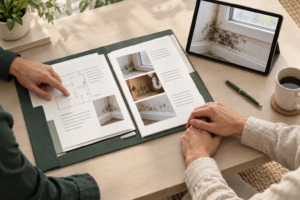
An inspection report and a proposal serve different purposes. The report documents findings. The proposal explains the work being offered and its price.
Our proposal and electronic-signature tools help us prepare a written scope that reflects the job. We can describe the areas involved, explain the proposed services, and present the pricing for review.
Before approving a proposal, you should be able to ask:
- Which areas does this proposal cover?
- What work is included?
- Are there exclusions or items another contractor needs to handle?
- What should happen next?
Those questions are welcome. A clear scope gives everyone a better starting point.
Making follow-up conversations easier
Questions don’t always come up during the inspection. You might review the report later, discuss it with a family member, or need to share information with a contractor.
Keeping the project documents together helps us refer to the same observations, photographs, and proposed work during those conversations. It also gives us a record to revisit if you contact us about the property again.
For additional background, the EPA’s guide to mold, moisture, and your home explains moisture control, cleanup considerations, and questions homeowners may have when addressing a mold problem.
A more organized experience for Charleston homeowners
Good documentation supports the work we do and the conversations we have with our customers. Our goal is to make it easier for you to understand what was observed, review the available information, and consider the recommended next steps.
If you have a mold concern at your Charleston-area property, contact Charleston Mold Remediation. We’ll discuss your concerns and help you determine the appropriate next step.