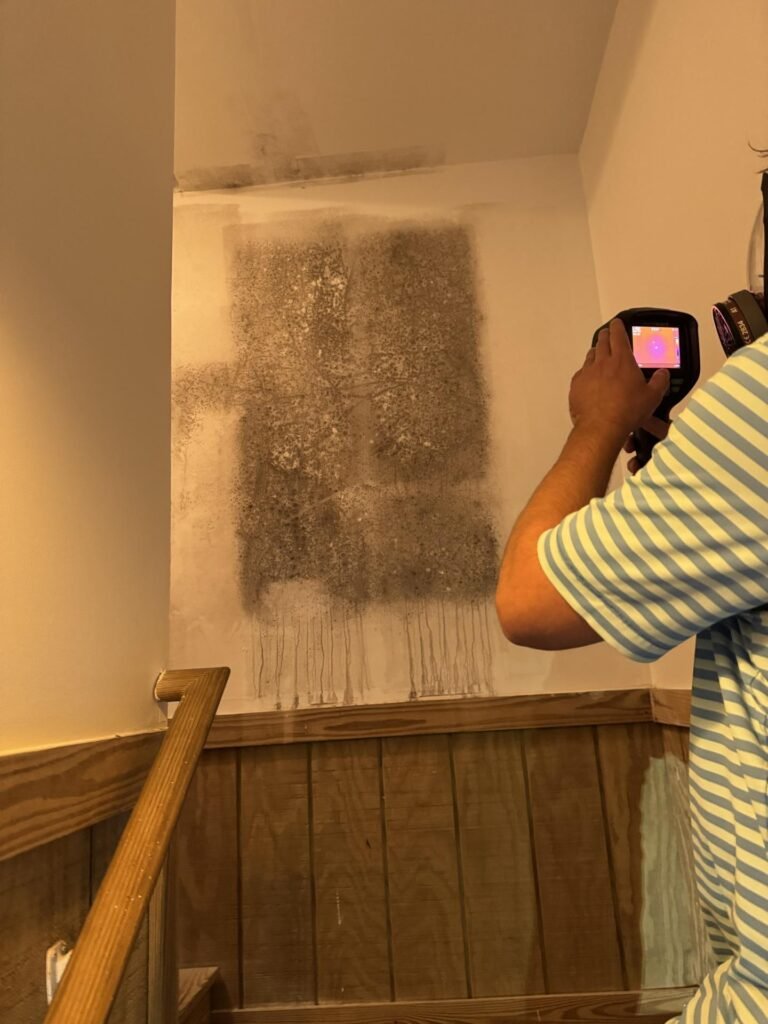
If you’ve noticed a musty smell in your home, visible mold on walls or ceilings, or persistent allergy-like symptoms that never seem to go away, your indoor air may be making you sick. One of the most serious, and least talked about, health consequences of mold exposure is aspergillosis, a respiratory disease caused by inhaling Aspergillus mold spores.
In coastal areas like Charleston, Seabrook Island, and Isle of Palms, high humidity and moisture create perfect conditions for mold growth. Understanding the connection between indoor air quality and aspergillosis could protect your lungs and your family.
What Is Aspergillosis?
Aspergillosis is a disease caused by Aspergillus, a common genus of mold found both outdoors and indoors. While most healthy people breathe in Aspergillus spores every day without issue, those with weakened immune systems, asthma, or existing lung conditions face a much higher risk of developing serious illness.
According to the CDC, aspergillosis comes in several forms:
- Allergic Bronchopulmonary Aspergillosis (ABPA) — an allergic reaction primarily affecting people with asthma or cystic fibrosis
- Chronic Pulmonary Aspergillosis — a long-term lung infection causing cavities and tissue damage
- Invasive Aspergillosis — the most severe form, where the infection spreads beyond the lungs and can be life-threatening in immunocompromised individuals
- Aspergilloma — a ball of mold that grows in the lungs, often in people with prior lung disease
Common symptoms include chronic cough, shortness of breath, chest pain, fever, and in severe cases, coughing up blood.
The Indoor Air Quality Connection
Here’s the critical link most homeowners don’t know: Aspergillus mold grows indoors, releases spores into your air supply, and those spores can be inhaled every time you breathe inside your own home.
Researchers at the Harvard T.H. Chan School of Public Health’s Healthy Buildings Program have identified indoor air quality as one of the most overlooked public health issues of our time. Their research highlights that buildings with moisture problems and mold growth are directly linked to respiratory illness — and that most Americans spend the majority of their time indoors where this exposure is occurring.
A Harvard Healthy Buildings Program report that reviewed more than 200 scientific studies found that environmental exposures in buildings — including mold — can significantly and negatively impact occupant health. Harvard T.H. Chan School of Public Health
Poor indoor air quality from mold is not just an inconvenience. It is a documented health hazard.
Why South Carolina Homes Are Especially Vulnerable
Charleston and the surrounding coastal communities sit in one of the most humid climates in the United States. Summer humidity levels routinely exceed 80-90%, and homes are frequently exposed to:
- Flooding and storm surge from hurricanes and tropical storms
- Moisture intrusion through crawl spaces, attics, and aging siding
- Condensation buildup from air conditioning systems cycling in high humidity
- Water damage from plumbing leaks in older homes
Research shows that homes in naturally humid areas are particularly susceptible to high indoor humidity levels, since outdoor conditions are reflected indoors — and that poor ventilation significantly increases airborne mold concentrations. WA Health
All of these conditions create ideal environments for Aspergillus and other mold species to colonize walls, subflooring, HVAC systems, and ductwork.
Who Is Most at Risk?
While Aspergillus spores are everywhere, aspergillosis is most dangerous for:
- People undergoing chemotherapy or organ transplants
- Those living with HIV/AIDS
- Individuals with asthma, COPD, or cystic fibrosis
- Elderly adults with compromised immune function
- Children with developing respiratory systems
Medical research confirms that fungal infections of deeper tissues are generally limited to individuals with severely impaired immune systems, though mold should not be allowed to grow unchecked indoors for any occupant. PubMed
Even for otherwise healthy people, long-term exposure to elevated Aspergillus spore counts can trigger allergic reactions and respiratory sensitization over time.
Signs Your Home May Have an Aspergillus Problem
You don’t need to see mold to have a problem. Watch for:
- A persistent musty or earthy odor
- Visible dark spotting on walls, ceilings, or around HVAC vents
- Worsening allergy or asthma symptoms when indoors
- Unexplained respiratory illness, chronic cough, or sinus congestion
- Prior water damage that was never professionally remediated
- Discoloration under sinks, around windows, or in bathrooms
Musty odors, dampness, water leaks, high humidity, and visible mold growth are all common indicators that airborne spores are actively being produced indoors. ESF
What to Do: Protecting Your Indoor Air
1. Don’t Ignore Water Damage
Any water intrusion, whether from a leaky roof, plumbing failure, or storm flooding, must be addressed immediately. Mold can only grow and amplify indoors when there is an adequate supply of moisture, and that moisture source must be corrected before any remediation effort can succeed. PubMed
2. Test Your Indoor Air
If you suspect mold, a professional air quality test can measure spore concentrations indoors versus outdoors. An elevated indoor spore count points to an active indoor source.
3. Hire Certified Remediation Professionals
Not all mold remediation companies are equal. Before you hire anyone to work in your home, it’s worth understanding the credentials that separate trained professionals from unlicensed contractors.
The Water Restoration Technician (WRT) certification is one of the most recognized standards in the remediation industry, covering proper containment, moisture control, and safe removal of mold-affected materials. Before you sign any contract, take a few minutes to learn what WRT certification means and what to look for in a qualified technician. Knowing what questions to ask could save you from an incomplete, or worse, harmful remediation job.
At Charleston Mold Remediation, we believe an informed homeowner is our best customer.
4. Improve Ventilation
Ensure your HVAC system is properly maintained and that your home has adequate airflow. Bathroom exhaust fans, crawl space encapsulation, and dehumidifiers all help reduce the moisture that mold needs to survive.
5. Schedule a Professional Inspection
If you’ve had any water damage history, or if symptoms have been persistent, a professional mold inspection is the most reliable way to assess the situation.
When to Call a Doctor
If you or a family member is experiencing persistent respiratory symptoms — especially if you are immunocompromised — see a physician. Aspergillosis is diagnosable through imaging, blood tests, and bronchoscopy. Early treatment with antifungal medications significantly improves outcomes.
The Bottom Line
Your home should be a place of safety, not a source of illness. Bad indoor air from mold is a real and documented health threat — and aspergillosis is one of the most serious consequences of unchecked Aspergillus growth indoors.
If you’re in the Charleston area and concerned about mold in your home, don’t wait. Contact the team at Charleston Mold Remediation for a professional inspection. We serve Seabrook Island, Isle of Palms, Edisto Beach, Sullivan’s Island, Mt. Pleasant, and the greater Charleston area.
Your air matters. Breathe better.
Sources: CDC Aspergillosis Overview | Harvard T.H. Chan School of Public Health Healthy Buildings Program | WRT Training | American College of Allergy, Asthma & Immunology